Showing posts with label connection. Show all posts

Wednesday, January 21, 2026

This Book Made Me Think of You by Libby Page

THIS BOOK MADE ME THINK OF YOU by Libby Page came to my attention because of being a LibraryReads pick for February and I am SO glad it did. In contention for my favorite book of the year, the heartwarming story centers on Matilda (Tilly) Nightingale whose husband, Joe, has recently died. While battling a fatal diagnosis, Joe arranged with the local bookstore owner, Alfie, to give Tilly a book a month after his death. Each title prompts Tilly to take a step forward and, to me, Libby Page was “spot on” in her characterization of the feelings of grief and loss: “There's a darkness to her that wasn't there before, that sometimes feels like a fog and others like a stone lodged in her chest. She carries the darkness with her everywhere, all the time, even if on the surface she might look the same as before.” A new friend who is further along in her grief journey says, “My grief is un regalo -- a gift. He gave it to me. it is our memories. Our love. I don't want to put it down. I carry it gently.” Described as a “love letter to bookstores,” THIS BOOK MADE ME THINK OF YOU is truly a joy to read, featuring friendship, sisterhood, a sense of wonder, romance, and, importantly, growth by several characters. Plus, it reinforces the power of reading to transform us (“But isn't that one of the great things about fiction?’ he says. ‘It's an escape. Somewhere to go when you don't want to be where you are.’”) and this story is full of ideas for other books to read, including monthly themes and recommendations from Alfie’s bookstore.

THIS BOOK MADE ME THINK OF YOU received starred reviews from Kirkus (“The perfect cozy read for book lovers, sure to break and heal hearts.”), Library Journal (“Readers of all kinds will be captivated by this tender exploration of loss, healing, and the enduring connections that books create”), and Publishers Weekly (“Page crafts a taut plot and makes her characters achingly real”). ENJOY!!

Thursday, June 6, 2024

How the World Ran Out of Everything by Goodman

Do you remember the hunt for baby formula in 2022? I know that our family, spread over several states, were actively searching every time any of us went to a pharmacy, grocery store or even online outlet so as to provide our newest family member with sustenance. HOW THE WORLD RAN OUT OF EVERYTHING by Peter S. Goodman reflects on the pandemic’s impact by burrowing deep “Inside the Global Supply Chain.” Goodman, the Global Economics Correspondent for The New York Times, uses a case study involving a container filled with children’s toys to trace the breakdown in a system and “consequences of relying on faraway factories and container ships to keep humanity supplied with goods.” The text has three main sections: a review of China-centric globalization; price manipulation and engineered scarcities; and opportunities to reinvent the supply chain. Throughout, Goodman comments repeatedly on labor exploitation and deregulation; he stresses that, “ordinary people were paying the mounting costs” with weak unions, indifferent politicians, and over reliance on “Just in Time,” or lean, manufacturing. Extensive notes and an index comprise at least twenty percent of the book. HOW THE WORLD RAN OUT OF EVERYTHING received a starred review from Kirkus (“This book should be in the hands of policymakers and economists before the next crisis emerges.”) I would encourage readers looking for related perspective to also check out Arriving Today by Wall Street Journal columnist Christopher Mims. And, Goodman’s work even made me think of The Travels Of A T-Shirt In The Global Economy by Rivoli, published almost twenty years ago in a far more optimistic time.

Sunday, February 18, 2024

Supercommunicators by Charles Duhigg

SUPERCOMMUNICATORS by Charles Duhigg (The Power of Habit and Smarter, Faster, Better); describes “How to Unlock the Secret Language of Connection.” Duhigg, a Pulitzer Prize–winning investigative journalist and author, writes that this book “is an attempt to explain why communication goes awry and what we can do to make it better. At its core are a handful of key ideas.” He continues by describing three kinds of conversations (practical or decision-making; emotional; and social) which he says primarily addresses one of three broad questions: What’s this really about? How do we feel? Who are we? Duhigg stresses that we need be more skilled at determining which type of conversation is occurring and then also in applying the different skills needed for each. I found myself thinking about this recently when talking to a friend and was able to ask a version of “Do you want me to help you solve this problem, or just listen?” After several years of studying the topic, Duhigg believes that anyone can become a super communicator and can have more meaningful discussions or “learning conversations.” First step: ask yourself “Why am I opening my mouth?” He acknowledges that this is very difficult and employs real-life examples to illustrate several rules in a well-organized series of guides. To gain a better overview, see an essay by Duhigg  that outlines his thinking, particularly about listening, sharing, and connecting (recently published in The Wall Street Journal). SUPERCOMMUNICATORS received a starred review from Publishers Weekly. Much advice worthy of reflection, perhaps in conjunction with David Brooks’ How to Know a Person.

Tuesday, July 18, 2023

Eldercare 101 and The Gift of Aging

ELDERCARE 101 by Mary Jo Saavedra is an updated version of “A Practical Guide to Later Life Planning, Care, and Wellbeing.” In her introduction Saavedra compassionately points out that “while many of the twists and turns of eldercare are similar across America, each caregiving situation is unique” and that one’s own personal life situation and commitments “can be undermined by the unpredictable demands of elder caregiving, the time-consuming research it requires, and the crisis that is a constant companion.” A lifecare coach and counselor, Saavedra has compiled essays related to her Six Pillars of Aging Well-being. She begins by focusing on Legal issues, as described by a lawyer, then moves to the Living Environment itself. One sub-section there offers roughly 30 pages on various options (Adult Foster Care Homes, Continuing Care Retirement Communities, Assisted Living Facilities, and Memory Care) which are laid out in a straightforward manner. Other pillars include Spiritual, Social (looks at connecting and belonging), Medical (with a sub-section on the aging brain) and Financial. This text is full of details and helpful suggestions. ELDERCARE 101 also contains a glossary, notes, bibliography, and index, and brief biographies of chapter authors. See also Successfully Navigating Your Parents’ Senior Years and When your Aging Parent Needs Help

From Cambridge University Press, THE GIFT OF AGING by Marcy Cottrell Houle (a scientist and award-winning author) and Elizabeth Eckstrom (Chief of Geriatrics in the Division of General Internal Medicine & Geriatrics at Oregon Health & Science University) is subtitled “Growing Older with Purpose, Planning, and Positivity.” Referring to “the third act of our lives,” the text begins with a  Foreword by Bill McKibben and then offers multiple chapters split into four areas: Caring for Your Mind, for Your Body, for Yourself & Family (practical issues) and for Your Soul. Each offers a blend of scientific facts with inspirational stories. For example, they cite updated work by the American Geriatrics Society on the Beers List Criteria and “Ten Medications Older Adults Should Avoid or Use With Caution.” Other comments stress that “the top ten habits, including exercise, healthy diet, cognitive stimulation, creative engagement, and healthy sleep, all help prevent cognitive decline.” THE GIFT OF AGING is a generally cheerful book with numerous suggestions like wearing sturdy shoes even inside (slippers have their name for a reason) to avoid falls. Several Mediterranean Diet recipes and an Index are included, too. Other recent books on positive aging experiences include: The Wisdom of Morrie, and Wake Up With Purpose!

Wednesday, June 7, 2023

Spark by Chris Mettler and Jon Yarian

SPARK by Chris Mettler and Jon Yarian Offers “24 Concepts to Ignite, Unstick or Supercharge Your Work Life.”  With numerous short chapters, it is written in a relatively informal way “in everyday language and offers examples that real people can relate to.” Overall, this seems like a text which would be especially interesting to younger and mid-career workers, with advice like, “I learned to ask dumb questions, risk embarrassment, and embrace failure for the gift of knowledge it offers.” Both authors have extensive start-up business experience. Mettler has founded several companies and is currently Founder and Chairman of Sovereign, a marketing technology company; Yarian, described as a writer, speaker, serial entrepreneur, and performance coach, is Sovereign’s Senior Vice President of Operations and Strategy. They encourage readers to put aside preconceived notions and to be open to new ways of thinking and acting. For example, they define leadership as “the relinquishment of the illusion of control.” That, in turn allows people to see “your commitment to them and your vision for what is possible for you to accomplish together.” Isn’t that a terrific description of the best boss(es) you have had? SPARK is “a (mostly) modular book” with three main sections: the first involves concepts to work on within yourself, the second focuses on partnerships, teams, and interpersonal skills, and the third section looks more broadly across entire organizations and company culture. A final section suggests combinations and sequences. This relatively short (about 200 pages) but powerful book would be a fascinating text to read and discuss as a group.

Friday, April 15, 2022

Mental Health - books on Anxiety and Depression

Have you seen the news coverage of late regarding youth mental health? Consider “All Children 8 and Older Should be Screened for Anxiety, U.S. Task Force Says” or “’A Cry for Help’: CDC Warns of a Steep Decline in Teen Mental Health.” A somewhat more optimistic view is expressed in “Learning the Right Way to Struggle” which explains how students are encouraged to acknowledge their learning difficulties, for example, saying “I’m in the pit.” There are many, many excellent resources available and below are several new and forthcoming texts which deal with mental health issues. As they invariably note, these books are intended as a supplement rather than replacement for advice from a trained health professional.

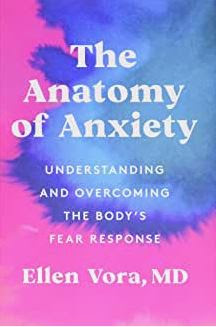
THE ANATOMY OF ANXIETY by Ellen Vora provides a unique insight into “Understanding and Overcoming the Body's Fear Response.”  Vora, who is board-certified in psychiatry and integrative holistic medicine, begins refreshingly by noting that she is less concerned with making a definitive diagnosis about a specific disorder and “more interested in exploring the particulars of each patient’s life and habits in order to start them down a path to recovery.” Next, she explores the contrast between true (related to an actual event like a death in the family) and false anxiety (perhaps driven by caffeine or sleep patterns) and then describes avoidable and purposeful anxiety in more detail. Later sections of this text explore concepts like techxiety (and social media use), the influence of women’s hormones, and role of diet and food. THE ANATOMY OF ANXIETY is well-written, accessible, and filled with practical suggestions; Vora includes extensive notes and a helpful index.

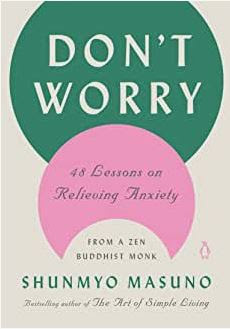
DON'T WORRY by Shunmyo Masuno, a Zen Buddhist monk and author of The Art of Simple Living, offers 48 Lessons on Relieving Anxiety. It’s worth taking the time to reflect upon these suggestions such as pare down your belongings, cherish the morning, spend 10 minutes a day in nature, or be a good listener. Readers have likely heard these ideas previously, but Masuno gathers them together and offers a two to four page commentary on each. He weaves in references to Zen Buddhism, like the Seven Gifts of Spiritual Dana, and encourages readers to develop a kind heart, practicing generosity and empathy. I can envision potentially using these short readings (one per week) with an Advisory homeroom as a way of reinforcing social emotional learning concepts.

A more specialized text, OVERTHINKING ABOUT YOU by Allison Raskin focuses on “Navigating Romantic Relationships When You Have Anxiety, OCD, and/or Depression.”  Raskin, co-host of the Just Between Us podcast, describes her text as “a blend of memoir and self-help.”  She writes very conversationally with direct appeals to the reader and even provides trigger warnings for sections which deal with self-harm or body image issues. Although this text would likely be of more interest to students slightly older than ours in high school, Raskin does refer frequently to mental health experts and suggests a number of calming and/or self-reflection exercises.  She also includes a list of resources, particularly for those who are part of the LGBTQIA+ community.

THE DEPRESSION TOOLKIT by William J Knaus, Alex Korb and others is designed to provide “Quick Relief to Improve Mood, Increase Motivation, and Feel Better Now.” It actually contains 46 activities grouped into three parts: Find Refuge from Negative Thoughts; Get Unstuck when You’re Down; and Beat Hopelessness and Low Motivation. Within each activity (e.g., Identify Sticky Thoughts or Cope with Change) the authors describe what to know, what to do and/or more to do. Unfortunately, they take a rather authoritarian or prescriptive tone, relying heavily on list making and (painful?) introspection. While some of the exercises may be helpful, it is difficult to imagine a reader (particularly a teen, like our students) being self-motivated enough to follow through. Perhaps this toolkit could work in conjunction with more formal therapy, but with so many relevant resources available, it may be more worthwhile to explore works like The Comfort Book which is less task-oriented.

In anticipation of Mental Health Awareness Month (coming in May), Random House has posted a number of recommended FICTION titles, too, including Glasgow’s How to Make Friends with the Dark.

Welcome to Continuing the Conversation!

We are in the midst of migrating book reviews to this new blog.  To see past reveiws and comments, please visit Book Talk ... A Conversation...