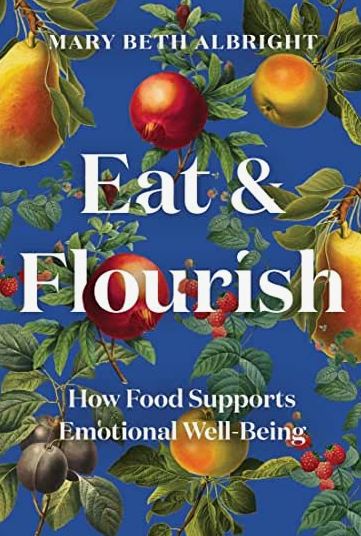
Holiday time … a chance to try new recipes while cherishing family
traditions. Here’s a few forthcoming cookbooks to consider.
SMITTEN KITCHEN KEEPERS by Deb Perelman is the most recent collection
in this series, filled with “New Classics for Your Forever Files.” It is an
extremely appealing cookbook, filled with colorful photos of delicious looking
food. As promised, it does lean to more time-honored favorites like apple crisp
or pound cake. Sections include breakfast, salad, soup & starters, vegetables
(big and small), meat (and shrimp), plus a variety of sweets and snacks. Each
recipe begins with a picture and a paragraph or two of commentary, then lists
ingredients and directions. Nutritional information is not provided, but
additional notes (with suggestions on substitutes or freezing, etc.) often are.
A nod to classics include choices like little gem salad, French onion soup, or
(skillet) chicken parmesan, but there are more unique offerings (like a citrus
salad with radishes and hazelnuts for breakfast). Personally, I want to try the
Challah Cheesecake Buns or Caramelized Cinnamon Sugar French Toast. Perelman does
also set a reassuring tone with comments like “Don’t fret if you don’t have all
of the spices called for. Use as many as you have; the fries will forgive” about
Spiced Sweet Potato Oven Fries. Cooks will enjoy this beautiful text; however, I
am a little surprised at the reliance on a heavier use of salt (e.g., adding
two or three teaspoons of salt in Cozy Chicken and Dumplings) and even butter (e.g.,
two full sticks in the crust of Deepest Dish Broccoli Cheddar Quiche) in some
recipes. SMITTEN KITCHEN KEEPERS received
starred reviews from Booklist and Library Journal (“Essential for all
collections.”).
by
Dick Logue is all about how to “Eat Well and Maintain Health
Naturally with Less Salt.” This is adapted from other low sodium cookbooks
which Logue has produced and the thoroughness of this recent cookbook prompted
me to investigate other offerings from him which feature slow cooker, high
fiber, and low cholesterol recipes.
LOW-SODIUM COOKING MADE EASY begins with
chapters devoted to spice blends & seasoning and to condiments & sauces
(like sweet and sour or a teriyaki substitute).
The Baked French Toast in the breakfast
section seems like an easy dish to prepare the night before. In addition, there
are plenty of main dishes – with chapters on chicken & turkey, beef, or
pork from which to choose. I am looking forward to trying Hungarian Beef Stew and
also Pork and Sweet Potatoes, both in the slow cooker. And for seafood, we will
be sampling Salmon Packets and Potato Crusted Fish. If you are still looking
for ideas, there are additional chapters with suggestions for soups, stews
& chilis, for salads & salad dressings, and for potatoes & rice. Unfortunately,
there are not many pictures which I personally feel are pretty essential to an
enjoyable, useful cookbook. The recipes, however, are relatively easy - as
promised - and point to the importance of changing shopping habits (e.g., look
for low-sodium bread) while pursuing dietary changes and a healthier lifestyle.
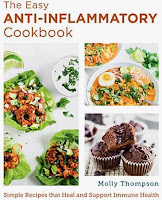
THE EASY ANTI-INFLAMMATORY COOKBOOK by Molly Thompson is
subtitled “Simple Recipes that Heal and Support Immune Health.” Like her
earlier efforts, this cookbook, begins with some basic information about
inflammation and then includes chapters on breakfast, on snacks, and on pasta.
These are followed by poultry & pork, beef, and seafood, with the final two
chapters featuring meatless meals and beverages. The recipes tend to be fairly
complex and are probably suited to a more experienced, committed cook. For
example, Paleo Coffee Cake Doughnuts with Crumble Topping had between one and
two dozen ingredients, including three kinds of flour (almond, tapioca, and coconut).
Ingredients are a bit unusual (at least to me), too; the appetizing Spicy Chicken
Thai-Inspired Lettuce Wraps called for coconut aminos, chili paste, and toasted
sesame oil. The pictures are colorful, with one for approximately every three
or four recipes. There is no nutritional information, but number of servings and
dietary designations (e.g., dairy free, gluten free, vegan, etc.) are included,
with some helpful “pro tips” also interspersed.