Showing posts with label medicine. Show all posts

Friday, August 14, 2026

Death at a Scottish Halloween by Lucy Connelly

DEATH AT A SCOTTISH HALLOWEEN by Lucy Connelly is part of a Scottish Isle series about a new doctor, Emilia McRoy, who has moved to Scotland where she puts her former emergency room skills to work helping patients and solving police cases. This was the first that I had read, and I felt that the characters needed more introduction. Their relationships became clearer as the story went on, of course. But one, Abigail, who is the assistant in the medical practice is definitely too good to be true … always ready with the scans, tests, and support, willing to work all hours, and not asserting herself in personal or professional settings. The mystery involved two deaths (one in a haunted house; another of someone “scared to death”) which was interesting and provided some twists with a hint of romance. Connelly also includes facts about witches and Scottish history (e.g., scientist Mary Sommerville). Overall, DEATH AT A SCOTTISH HALLOWEEN is a quick, light, cozy read, with a fun, festive theme and I hope that the quality of editing improves with future additions to the series.

Monday, June 1, 2026

The Invincible Brain by Majid Fotuhi

THE INVINCIBLE BRAIN by Majid Fotuhi offers “The Clinically Proven Plan to Age-Proof Your Brain and Stay Sharp for Life.” Booklist describes this text as “informative, practical, and inspiring.” The conversational tone, clear outline, and customization certainly contribute to that perception. A widely published and interviewed researcher, Fotuhi is an adjunct professor of Neuroscience at Johns Hopkins’s Mind/Brain Institute, an adjunct professor of Psychological and Brain Sciences at George Washington University, and the medical director of NeuroGrow Brain Fitness Center. He writes repeatedly and clearly about the five pillars of brain health (Fitness, Sleep, Diet, Mindset, and Training) and how to measure and increase them in a systematic way, encouraging his readers to focus on the area(s) where they want or need the most improvement. In order to get a benchmark assessment of brain function, Fotuhi provides direction on creating a brain portfolio and lists forty questions dealing with physical conditions, health habits, and socializing that “will bring to your attention things you may not have thought about, or help you realize there are things you have been tolerating that you could do something about.” He then suggests resources and weekly interventions which can change over the course of his twelve-week program. THE INVINCIBLE BRAIN has also been praised by fellow doctors/writers like  Sanjay Gupta, David Perlmutter, and John Ratey (Spark). Have a look.

Monday, January 26, 2026

Massively Better Healthcare by Halle Tecco

MASSIVELY BETTER HEALTHCARE by Halle Tecco is self-described as “The Innovator's Guide to Tackling Healthcare's Biggest Challenges.” Tecco, the founder of the venture fund Rock Health and an adjunct professor at Columbia Business School, has been a healthcare innovator herself, supporting and investing in numerous digital health companies. Her text is well-written and accessible and delivered in a logical manner. She begins with a section that describes US Healthcare, its costs and availability relative to other countries around the world, as well as describing the numerous stakeholders. This provides a strong basis for subsequent sections which deal with pathways to innovation and a checklist for evaluating new opportunities, and the four big lessons (“Work from the inside out, not the outside in; Align the margin and the mission; Be a good steward of health data; and Invest in evidence”) that she has learned from others in the field. Throughout, Tecco provides facts (“If the US healthcare system were a country, it would be the fourth-largest economy in the world.”), her own experiences (pricing for a prescription dermatological cream that went from $275 to $25 thanks to a pharmacist’s intervention), and tons of case studies (see graphic here).  Although MASSIVELY BETTER HEALTHCARE focuses on a particular sector, much of her framework could apply to innovators in other businesses.

Sunday, January 4, 2026

Eat Your Ice Cream by Ezekiel J. Emanuel

EAT YOUR ICE CREAM by Ezekiel J. Emanuel offers “Six Simple Rules for a Long and Healthy Life.” Emanuel, a bioethicist and professor at the University of Pennsylvania, focuses on avoiding self-destructive risks; developing and valuing relationships; staying sharp mentally; eating in a healthy manner; exercising (including grip strength and yoga); and sleeping well. Those categories are probably not a surprise to anyone who picks up this text, although specific findings of the many studies he cites might be. What is refreshing is Emanuel’s encouragement to do one’s best which is not always the best, as he freely admits by including several self-deprecating anecdotes. He further states, “Our goal should not be to “outlive” as many people as possible. Instead, the goal should be to live a healthy and fulfilling life” and hence his emphasis on the “more important” social and psychological components as well as physical ones. Emanual touches on topics like the importance of willpower, lifestyles in the Blue Zones, and “intentionally trying new things that use different mental functions.” These could include trying new recipes or writing an autobiography for your grandchildren. He writes, “My suggestion is to be like Ben Franklin. Ask yourself: what can I do that will be useful, engaging, mind expanding, and helpful to the lives of others?” Hopefully, the overlapping nature of these wellness aspects is becoming clearer, too. Interested? The Wall Street Journal recently published a short excerpt from EAT YOUR ICE CREAM. The text itself could benefit from some brief chapter summaries, but the research is significant; approximately twenty-five percent of the book is devoted to bibliographic notes and references.

Sunday, September 14, 2025

Coded Justice by Stacey Abrams

CODED JUSTICE by Stacey Abrams is the third book in the mystery series featuring lawyer Avery Keene. Currently working as an internal investigator, Avery accepts a client whose innovative product (a computerized neural network with talking robots) utilizes artificial intelligence algorithms to provide patient care to veterans. Run by a dedicated ex-military scientist, Rafe Diaz, the company is about to execute an IPO, but another scientist/coding engineer has died recently. Was it some kind of malfunction in the air conditioning system (as the local police believe) or malicious intent? Avery and her team (Jared, the cyber security expert; Noah, a lawyer and financial analyst; and Ling, a doctor) have a limited time to discover the truth, especially as more deaths occur, increasingly pointing to danger for all. This thriller is complex with plenty of suspects. If the pace seems slow at times, that is balanced by being informative and thought-provoking about the ethical dilemmas associated with artificial intelligence. CODED JUSTICE received a starred review from Booklist (“The very real concerns with veteran health, privacy, and the chilling prospect of AI run amok will engage readers’ brains and souls.”)

Sunday, June 15, 2025

The Family Dynamic by Susan Dominus

                                         Happy Father's Day!

THE FAMILY DYNAMIC by Susan Dominus is subtitled “A Journey into the Mystery of Sibling Success” and was favorably reviewed in The New York Times and The Wall Street Journal  written respectively by Ezekiel and Rahm Emmanuel, high-achieving brothers briefly mentioned in the book. Dominus, a Pulitzer Prize winning journalist and lecturer at Yale, spent years researching a half dozen families whose stories she shares, interspersed with chapters titled Generators, Expectations, Luck and Fate, Finding Nurture, Openness, and Better, Better, Best. As I read about best-selling novelist Lauren Groff and her brother Adam (a successful entrepreneur in the health-care field) and sister Sarah (a world class triathlete and Ironman competitor), I was struck by their family “slogan:” You are so tough!, reminiscent in some ways of the Harbaughs’: Who’s got it better than us?  Dominus describes her own book by writing, “It is safe to say that if this is a book about high achieving families, it is often also about the real costs of having that kind of drive, the sacrifices that having that kind of focus sometimes entails or even the emotional anguish.” And Dominus does more than talk about the supportive role of parents, siblings, and mentors; she also introduces scientists and their research, often providing additional background on their own children. Referencing a “vast body of well-respected research,” Dominus indicates that “parenting effects on children's outcomes … are likely much less dramatic than we have all been led to believe.” THE FAMILY DYNAMIC is a thoughtful work that may require slow, careful reading, but that should spark important conversations on helping children best achieve their potential. The Washington Post reviewer Judith Warner says, “THE FAMILY DYNAMIC will no doubt disappoint readers looking for bullet-pointed parenting-for-success tips. It’s just not that kind of book. It’s better.” 

Tuesday, January 7, 2025

Sleep Drink Breathe by Michael Breus

SLEEP DRINK BREATHE by Michael Breus is subtitled “Simple Daily Habits for Profound Long-Term Health” and focuses on the basics. Breus is a double-boarded clinical psychologist and clinical sleep specialist who stresses that “doing something adequately, or at the bare minimum, is not the same as doing it well and getting more out of your effort.” He begins with a discussion of what he calls the first domino and his primary area of expertise, sleep. In that and subsequent sections he provides simple facts, offers assessment tools (e.g., sleep diary), reviews troubleshooting options (e.g., maintain a consistent sleep schedule), and provides scientifically based best practices. Breus frequently summarizes helpful Takeaways and then outlines a three-week Sleep-Drink-Breathe Plan. That plan involves five “check-ins” with accompanying activities throughout the day and commitment might be higher if readers encourage a friend to join them.  Although some chapters of SLEEP DRINK BREATHE are stronger than others, the tone throughout is conversational and generally uplifting. As readers review this text, they may also be interested in a recent New York Times article (quoting Breus and other experts) about relatively easy health tips.

Sunday, September 8, 2024

Take Care of Them Like My Own by Ala Stanford

TAKE CARE OF THEM LIKE MY OWN by Ala Stanford, pediatric surgeon and founder of the Black Doctors Consortium, deserves a wide readership. It is a fascinating tale, although there could be some triggering due to the discussions of child abuse. Stanford embraces her life story (subtitled “Faith, Fortitude, and a Surgeon's Fight for Health Justice”) and relates it in great detail. Clearly, Stanford confronted prejudice and discrimination throughout her pioneering and remarkable career. She comments on biases in the medical system, including a lack of “generational knowledge, kind of like generational wealth” and relates numerous shocking (to me) instances such as when a supervisor torpedoes Stanford’s chances at a future placement by outright lying about her. She is an accomplished, inspirational fighter, and I hope that many readers locate TAKE CARE OF THEM LIKE MY OWN. It is well-written and an engrossing read. Book Groups could consider promoting it with the newly published Lovely One by Ketanji Brown Jackson.

Wednesday, May 1, 2024

The Sweet Blue Distance by Sara Donati

THE SWEET BLUE DISTANCE by Sara Donati is a work of historical fiction set in 1857 which describes the many adventures and resourcefulness of Carrie Ballentyne, a young nurse and midwife. First, there is the sometimes harrowing travel – via train, riverboat, stage, and horseback – from New York State to Sante Fe where she has accepted a position with a Dr. Markham. Both along the way and once in Sante Fe, this young woman finds her beliefs tested as she faces hypocrisy and bigotry (against women and people of different races or classes). The book is quite long and Donati stresses this cultural bias to the point where her modern perspective almost overrides the historical one. However, the story’s action (many births and medical emergencies), elements of mystery, and a romantic subplot will likely keep readers engaged. With so much involved, the author provides a detailed list of the cast of characters and their families, a Spanish-English glossary, and a robust bibliography. Carrie proves herself to be very resilient, mirroring her own mother’s advice: “You are the daughter of strong women and equal to whatever challenges you meet. Missteps are inevitable, but you will find your way.”  

Wednesday, March 13, 2024

The Heart and the Chip by Rus and Mone

THE HEART AND THE CHIP by Daniela Rus and Gregory Mone is a generally optimistic non-fiction work that is subtitled “Our Bright Future with Robots.” Author credentials are impressive and contribute to making this a relevant, easy to read text: Rus is actively involved in the robotics field as director of MIT’s Computer Science and Artificial Intelligence Laboratory and Mone has co-authored several other texts with scientists like Susan Cain, Bill Nye and Neil deGrasse Tyson. Rus and Mone have divided their new text into three parts: Dreams, Reality, and Responsibility. Focusing on robotics, artificial intelligence (AI), and machine learning, they are adept at providing useful definitions (“a robot is a machine capable of following and repeating these three steps: (1) Sense (2) Think (3) Act”) and distinctions: “machine learning and artificial intelligence are often confused, as the latter has become a business and marketing buzzword, but you can think of machine learning as pattern recognition systems that work in service of AI, to assist with higher-level decision-making and reasoning.”

It was also very exciting to read about their positive spin on current (e.g., using scans in medical diagnoses with significantly reduced error rates when humans and robots work together) and future applications (e.g., developing exoskeletons to improve the mobility for older people), including numerous suggestions (a wish list, really) for inventions capable of meeting needs like: smarter, more sensitive hands; softer, safer robots; more agile robots (and perhaps ones that are better at anticipating human actions, especially when driving); ways to build robots faster; incorporating better artificial muscles and more powerful batteries, plus better sensors and faster brains; and mechanisms for communicating more naturally with robots. Yet another section outlines eleven attributes for future robotics systems, addressing questions of regulation and ethics at a high level. Rus and Mone acknowledge that there is vast potential for malicious hackers and see the need for cybersecurity as a reason that could “spur tremendous job creation.” Roughly five percent of the text is notes for reference by readers and researchers.

Tuesday, July 18, 2023

Eldercare 101 and The Gift of Aging

ELDERCARE 101 by Mary Jo Saavedra is an updated version of “A Practical Guide to Later Life Planning, Care, and Wellbeing.” In her introduction Saavedra compassionately points out that “while many of the twists and turns of eldercare are similar across America, each caregiving situation is unique” and that one’s own personal life situation and commitments “can be undermined by the unpredictable demands of elder caregiving, the time-consuming research it requires, and the crisis that is a constant companion.” A lifecare coach and counselor, Saavedra has compiled essays related to her Six Pillars of Aging Well-being. She begins by focusing on Legal issues, as described by a lawyer, then moves to the Living Environment itself. One sub-section there offers roughly 30 pages on various options (Adult Foster Care Homes, Continuing Care Retirement Communities, Assisted Living Facilities, and Memory Care) which are laid out in a straightforward manner. Other pillars include Spiritual, Social (looks at connecting and belonging), Medical (with a sub-section on the aging brain) and Financial. This text is full of details and helpful suggestions. ELDERCARE 101 also contains a glossary, notes, bibliography, and index, and brief biographies of chapter authors. See also Successfully Navigating Your Parents’ Senior Years and When your Aging Parent Needs Help

From Cambridge University Press, THE GIFT OF AGING by Marcy Cottrell Houle (a scientist and award-winning author) and Elizabeth Eckstrom (Chief of Geriatrics in the Division of General Internal Medicine & Geriatrics at Oregon Health & Science University) is subtitled “Growing Older with Purpose, Planning, and Positivity.” Referring to “the third act of our lives,” the text begins with a  Foreword by Bill McKibben and then offers multiple chapters split into four areas: Caring for Your Mind, for Your Body, for Yourself & Family (practical issues) and for Your Soul. Each offers a blend of scientific facts with inspirational stories. For example, they cite updated work by the American Geriatrics Society on the Beers List Criteria and “Ten Medications Older Adults Should Avoid or Use With Caution.” Other comments stress that “the top ten habits, including exercise, healthy diet, cognitive stimulation, creative engagement, and healthy sleep, all help prevent cognitive decline.” THE GIFT OF AGING is a generally cheerful book with numerous suggestions like wearing sturdy shoes even inside (slippers have their name for a reason) to avoid falls. Several Mediterranean Diet recipes and an Index are included, too. Other recent books on positive aging experiences include: The Wisdom of Morrie, and Wake Up With Purpose!

Tuesday, June 20, 2023

Lady Tan's Circle of Women by Lisa See

LADY TAN'S CIRCLE OF WOMEN by Lisa See (Snow Flower and the Secret Fan, The Tea Girl of Hummingbird Lane) is a LibraryReads Hall of Fame selection for June. This novel takes place during the Ming dynasty, in the late 1400s and early 1500s in Wuxi, China. The main character, Tan Yunxian, grows from her milk days as a little girl through her hair-pinning days as a young woman to the rice-and-salt days as a wife and mother and finally to sitting quietly days, the mature years. She shares a deep friendship with a young midwife, Meiling, and they experience some heart rendering events together. Tan Yunxian learns to be a female doctor through her own grandmother and ancestral heritage. Although she is often stifled by societal expectations (some of which, like foot binding, are difficult to read), Tan Yunxian persists, combats smallpox, and even treats others at the royal court. The women who influenced and cared for her, including her mother, called Respectful Lady, her father’s concubine, named Miss Zhao, her maid, Poppy, and even her combative mother-in-law, Lady Kuo, all have a lasting impact on her life. It seems like I am often amazed at how historical fiction novels not only provide vivid details about a time period (and Lisa See is excellent at this), they also frequently illuminate little known heroines. In a recent email, the publisher suggested that readers who wish to learn more about See’s writing process and inspiration, check out this Q&A. There, I learned that Tan Yunxian was a real person who actually did document her cases and that the information, in annotated form, is still available over 500 years later. Interested readers can register to join a discussion with Lisa See on June 27 at noon, Central time or visit her website for further details about LADY TAN'S CIRCLE OF WOMEN. In the meantime, start reading this surprisingly absorbing story.

Friday, June 2, 2023

The People's Hospital by Ricardo Nuila
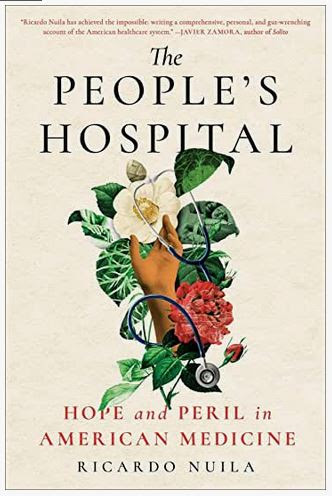
THE PEOPLE'S HOSPITAL is written by Ricardo Nuila, an associate professor of medicine, medical ethics, and health policy at Baylor College of Medicine. Nuila subtitles his book “Hope and Peril in American Medicine” and he profiles several patients’ experiences with the Harris Health System and innovations at Ben Taub hospital in Houston. The patients have different illnesses (e.g., cancer, knee pain, HIV positive since birth) and life situations (undocumented immigrant, green card holder, mother with high risk pregnancy) but they are uninsured and thus rely on a “safety-net” hospital like Ben Taub which is public and locally funded. His statistics are astounding: Texas has the nation’s largest uninsured population and Harris Health provides “more than $1 billion worth of healthcare every year for the indigent.” His writing is excellent, using “stories to think through a problem that goes beyond any one body.” There is broad recognition that we need to fix American healthcare and Nuila crafts an argument that is empathetic, personal, and worth reading. THE PEOPLE'S HOSPITAL received a starred review from Kirkus (“compassionate, engrossing story of frustrated hopes and unlikely victories”).

Welcome to Continuing the Conversation!

We are in the midst of migrating book reviews to this new blog.  To see past reveiws and comments, please visit Book Talk ... A Conversation...